Mission
The group connects observation, theory, simulation, and experiment. Telescope, observatory, and large-survey data are used to study the structure and evolution of cosmic systems, while physical models and numerical simulations are developed to interpret those observations. In planetary science, laboratory and telescopic spectroscopy and hyperspectral imaging are combined with machine-learning methods to identify surface composition and investigate Solar System mineralogy.
The long-term goal is to create an interdisciplinary research environment in which students and researchers can follow the complete path of a scientific problem—from observation and data acquisition to processing, simulation, spectral analysis, and physical interpretation.
Core Research Areas
1. Observational Astronomy & Astrophysics
Imaging, spectroscopy, and large astronomical surveys across multiple wavelengths, with emphasis on galaxy evolution, galaxy environments, groups and clusters, stellar and gas kinematics, star formation, and active galactic nuclei. A future objective is to expand independent and collaborative observing programs using national and international facilities, especially the Iranian National Observatory.
2. Galaxy Formation & Evolution
Investigating how environment, dark-matter halo properties, large-scale cosmic structure, and internal galaxy processes shape galaxy evolution by combining observations, theoretical models, and cosmological simulations.
3. Active Galactic Nuclei & Supermassive Black Holes
Studying black-hole accretion, energetic outflows, radio jets, and the interaction between central supermassive black holes and their surrounding gas, including the impact of released energy on star formation and host-galaxy evolution.
4. Gas Dynamics, Chemistry & Radiative Transfer
Combining hydrodynamic simulations, chemical models, and radiative-transfer calculations to study atomic and molecular gas around supermassive black holes and in the interstellar medium. HDGAS is an example of this approach, including predictions of atomic and molecular emission-line intensities for direct comparison with telescope data.
5. Computational Astrophysics & Numerical Simulations
Hydrodynamic simulations, semi-analytic modeling, and analysis of large cosmological simulations are used to explore gas dynamics, AGN feedback, galaxy evolution, radio-jet evolution, and the relation between galaxies and large-scale structure. Relevant frameworks include Radio-SAGE and Illustris/TNG.
6. Astronomical Spectroscopy & Multi-wavelength Analysis
Developing and applying spectroscopic methods to extragalactic and Solar System targets. Absorption and emission lines, continuum spectra, integral-field data, and multi-wavelength observations are used to infer composition, temperature, density, velocity, gas and stellar motions, and star-formation histories.
7. Hyperspectral Imaging in Planetary Science
Using hyperspectral imaging to create spatial-spectral data cubes for identifying diagnostic material signatures and studying mineral composition. The group investigates HSI for ground-based lunar observations and laboratory studies of planetary analog samples.
8. Lunar Mineralogy & Planetary Sample Spectroscopy
Comparing laboratory spectra and lunar-analog materials with lunar surface spectra to identify minerals and construct mineralogical maps. Recent work combines hyperspectral imaging with machine-learning approaches such as K-Means, hierarchical clustering, Gaussian mixture models, and principal-component analysis, including studies of volcanic lunar analogs and the Bechar 010 lunar meteorite.
9. Spectroscopic Instrumentation & Space Missions
Exploring the use of imaging and spectroscopic instruments in small space missions, including scientific methods for spectrometers, hyperspectral imagers, satellite systems, and observation scenarios for the Moon and other Solar System bodies. The long-term aim is to connect fundamental science, instrument development, and mission design.
10. Artificial Intelligence & Data Science
Applying machine learning, deep learning, and data-science methods to galaxy classification, kinematic analysis, simulation pattern recognition, spectral-cube analysis, mineral classification, and compositional mapping. Hyperspectral Imaging + Machine Learning is a central pathway in the planetary-science program.
Research Structure
Observation & Spectroscopy
Extracting physical information from the Universe using telescopes, observatories, astronomical surveys, and spectroscopic systems.
Modeling & Computational Astrophysics
Interpreting physical processes with numerical simulations, theoretical models, statistical methods, and artificial intelligence.
Planetary Science & Exploration
Combining spectroscopy, hyperspectral imaging, planetary-analog experiments, and machine learning to study the Moon and other Solar System objects and support future space-mission applications.
These three themes are intentionally interconnected; the group aims to build synergy between them.
Group Members
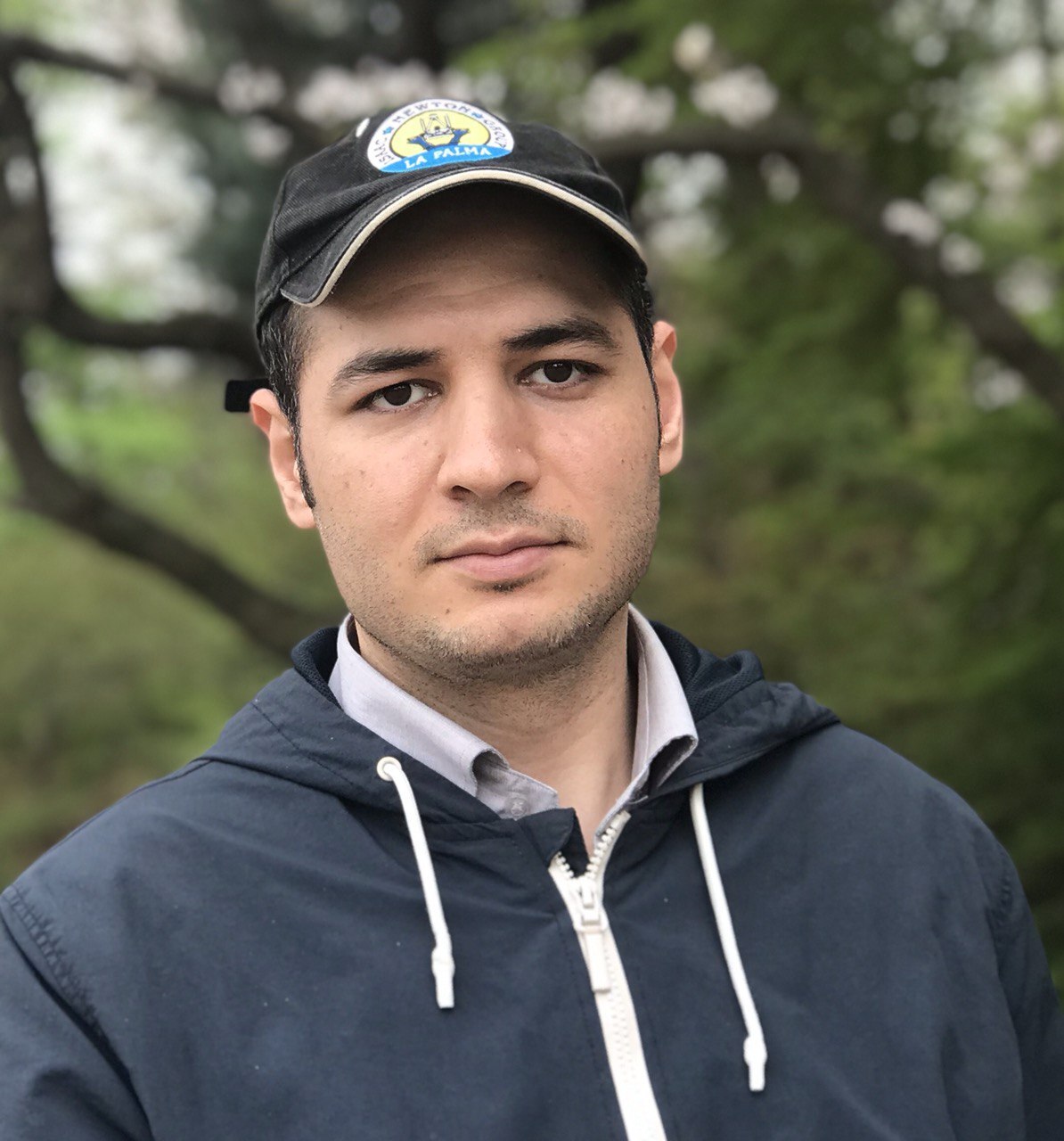


The group brings together graduate researchers and collaborators working across astrophysics, planetary science, spectroscopy, computational methods, and space engineering.
Students & Academic Supervision
Current and previous MSc, BSc, and PhD research projects supervised or advised within astrophysics, planetary science, spectroscopy, hyperspectral imaging, and space engineering.
G. Ismayilova-Heuvel MSc
LUNEX EMEC3 Raspberry Pi Rover: A Compact Teleoperated Rover for VNIR Spectroscopy in Planetary Analogue Environments
ILEWG LUNEX EuroMoonMars, Netherlands
I.G.M. Enciso MSc
LUNEX Rover-Based In-Situ Spectral Acquisition at a Lunar–Martian Analogue Site
ILEWG LUNEX EuroMoonMars, Netherlands
A. Scardigno MSc
Hyperspectral Design for Earth-Observation 3U CubeSat
Leiden Observatory
P. Mirta MSc
3U CubeSat Designed for Monitoring Environmental Changes on Earth
TU Delft — ASM
P. Ananwatanyoo MSc
Lunar Rover Designed for Analyzing Lunar Surface Composition
TU Delft — ASM
A. Rinon & U. Sonou BSc
3U CubeSat Payload System and Orbital Models
Inholland University of Applied Sciences, Netherlands
E. Woest & B. Cameron BSc
Lunar Spectroscopy and Remote Sensing
Leiden Observatory
C. Irakleous PhD
Spectral Analysis: Meteoroid Samples and Lunar Surface Mineralogy
LIACS, Leiden University
M. Pourabbas PhD
Impact of AGN Feedback on Galactic Gas Dynamics
University of Birjand, Iran
F. Fazel PhD
Lunar Surface Composition Using Hyperspectral Imaging and Machine Learning
LIACS, Leiden University
Scientific Collaborations
The interdisciplinary nature of APEX requires collaboration across astronomy, astrophysics, planetary science, space engineering, spectroscopy, and data science. The research background of Dr. Mojtaba Raouf includes collaborations with researchers and institutions including Leiden Observatory, Leiden University, Delft University of Technology, the Institute for Research in Fundamental Sciences (IPM), ILEWG/LUNEX-EuroMoonMars, and other international universities and research centers.
Previous extragalactic astrophysics work has also used data and collaborations from major surveys such as the SAMI Galaxy Survey and Galaxy And Mass Assembly (GAMA). In planetary exploration, collaboration among astronomy, computer science, physics, geology, photonics, and space engineering supports joint laboratory, observational, and space-oriented projects.
Future Program
- Expand hydrodynamic simulations and radiative-transfer models of gas in galaxies and around supermassive black holes.
- Define new observing projects using the Iranian National Observatory and other facilities.
- Develop direct links between simulation outputs and spectroscopic observations.
- Expand hyperspectral imaging and spectroscopy for lunar and Solar System studies.
- Develop lunar mineralogy methods combining laboratory and telescopic data.
- Apply machine learning and deep learning to astronomical and planetary datasets.
- Investigate small observing systems for laboratory imaging and spectroscopy.
- Create joint projects connecting astrophysics, planetary science, data science, and space engineering.
- Expand collaboration with universities, observatories, and research centers nationally and internationally.
- Recruit graduate students and postdoctoral researchers for observational, computational, and planetary projects.
Vision
The vision of APEX is to create a dynamic research environment at the boundary of observational astronomy, computational astrophysics, spectroscopy, and planetary exploration—an environment in which observation and experiment are connected to modeling and computation, and modern data-science and AI tools are used to address fundamental questions about the Universe.
From gas around supermassive black holes and the evolution of galaxies to spectral analysis of the lunar surface, the common theme is the extraction of physical information from data, the modeling of natural processes, and the comparison of theoretical predictions with observations.